
Guest Blogged by Ellen Theisen of VotersUnite.org
 [Ed Note: Ellen appeared on CNN’s Lou Dobbs Tonight this evening to discuss this report. The video is now posted here.]
As we approach the 2008 general election, the structure of elections in the United States — once reliant on local representatives accountable to the public — has become almost wholly dependent on large corporations, which are not accountable to the public. Most local officials charged with running elections are now unable to administer elections without the equipment, services, and trade-secret software of a small number of corporations (primarily Election Systems and Software (ES&S), Hart InterCivic, Sequoia Voting Systems, and Premier Election Systems (formerly Diebold), though a few other corporations have a very small share of the market).
If the vendors withdrew their support for elections now, our election structure would collapse.
However, some states and localities are recognizing the threat that vendor dependency poses to elections. They are using ingenuity and determination to begin reversing the direction.
This week, VotersUnite.Org released a report [PDF] that examines the situation, how we got here, and steps we can take to limit corporate control of our elections in 2008 and reduce it even further in the future.
Case studies presented in our report give examples of the pervasive control voting system vendors now have over election administration in almost every state, and the consequences some jurisdictions are already experiencing. We discovered that such dependency has allowed vendors to…
- Coerce election officials into risk-riddled agreements, as occurred in Angelina County, Texas, in May 2008.
- Endanger election officials’ ability to comply with federal court orders, as occurred in Nassau County, New York in July 2008.
- Escape criminal penalties for knowingly violating state laws and causing election debacles, as occurred in San Diego, California in 2004.
Analysis of the impact of laws and decisions at all levels of government demonstrates that lawmakers and officials have facilitated the dependence of local elections on private corporations. Our report explores:
- How the mandates of the Help America Vote Act of 2002 (HAVA) and the inaction of the federal government left the states and localities with nowhere to turn but to the vendors.
- How state laws, passed by ill-informed representatives, limited the options of local officials to the voting systems developed by big corporations.
Voting system vendors’ contracts, communications, and histories explored in the report reveal that vendors exploit the local jurisdictions’ dependency by charging exorbitant fees, violating laws and ethics, exerting proprietary control over the machinery of elections, and disclaiming unaccountability.
However, even in the current vendor-dependent environment, some jurisdictions are resisting vendor control and finding ways to decrease their dependency and build an independent foundation for their election structure. See page 40 of the report for case studies that point to the power state and local election officials have to reclaim control of elections.
- More than they realize, many local election officials have the legal authority to oversee vendors and limit vendor dependency, as is occurring in Luzerne County, Pennsylvania.
- States can “kick the vendor out of the state†or at least stop further vendor infiltration into their elections by following the lead of Oklahoma and Oregon.
- Paper ballots allow local officials, like those in Curry County, New Mexico, to ultimately rely on their own devices and their own citizens, rather than on the high-tech devices sold by vendors. In the words of the deputy county clerk: “If necessary, we can always hand count them.”
In the final section of the report, we recommend practical, concrete actions for reducing vendor dependence. Even in time for the November 2008 general election, local officials and citizens can take positive steps to oversee the vendors’ goods and services and mitigate vendor control.
Citizens — both private and public — are beginning to realize that they can and must re-assert their ownership of elections and demand transparent citizen oversight of elections.


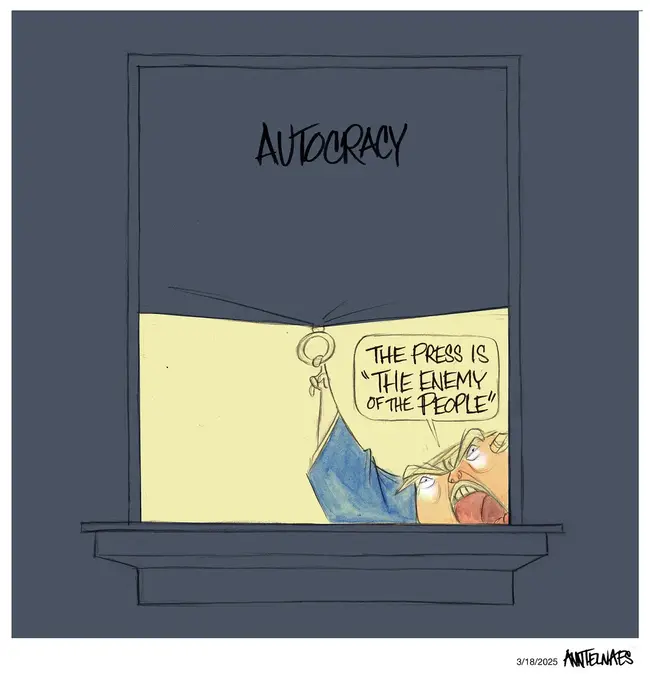
















To slow the growth of corporate fascism, perhaps the newly elected will rethink our directions, and review the limits of government vs. industry vs. varying religions.
We have to redefine what’s sacred for a democracy in a constitutional way, and how voting (and the census) can be handled honestly.
We’ve recently seen industry exercise imminent domain rights over private ownership. We’ve witnessed politicians reaching out to fund and seek support of religious establishments. Because of a failed voting system, we’ve experienced appointment of a president by the Supreme Court. Private mercenaries are now hired for overseas police actions. And we’ve recognized that although our government tries, prosecutes and convicts criminals, private investors profit by imprisoning them.
Too often private industry is fattened and rewarded by political favors, and returns the rewards in campaign contributions while an increasingly privatized government threatens to enhance the lives of some and leave others without.
This government was originally and constitutionally designed to be controlled and managed by the people; and not by corporate and/or foreign investors, religions, lobbyists, tyrants or dictators.
Allowing mixes of corporations, lobbyists, affluent investors in influencing and penetrating government while ignoring the general population are tickets for corruption and inevitable destruction.
We’ve been inching away from democracy for decades.
Hopefully the next election will bring about change. The question remains, will the election be honest?
Why not get rid of the problem all at once, like my state of Oregon. We’ve had vote by mail for nearly two decades with huge turnouts and very few complaints.
No lines to stand in, no hanging chads, and almost two weeks of “ballot in hand” allowing voters to take plenty of time to read the fine print in measures and amendments.
This time also helps the candidates compress their advertising to that two week period so voters have the candidates messages in one hand and the ballot in the other. What could be more fair?
What are the other states waiting for?
An idea – If the election supervisor is suspicious that there may have been chicanery, he/she could get a whole slew of 3X5 cards (cheap!) and a big box with a slot in the top, and a hasp and padlock. He/she could ask EVERY voter to just put the name of the person he wants for President on the card and drop it in the box. After the polls close, count the votes, and compare with the machine results. IF anyone doesn’t want to comply with the request, drop in a blank card! If enough precincts let it be known they’re going to do that, Rove’s attempt to steal the election might be deserted.
Jay S. –
While Oregon may have been able to do away with many of the private vendors, your vote-by-mail system is not as wonderful as you may think. There are a lot of probs with VBM. Many that you likely don’t even know about. See “Why Vote-by-Mail is a Terrible Idea” for details.