
Guest blogged by Winter Patriot
Regular BRAD BLOG readers will remember reading about Election Science Institute (ESI) and the report they prepared on the May 2 primary in Cuyahoga (Cleveland) County, because John Gideon blogged about it on Wednesday.
Also on Wednesday, at the Columbus Dispatch, Public Affairs reporter Mark Niquette and Senior editor Joe Hallett wrote about it too: Cleveland study questions accuracy of Diebold voting machines.
We have a few excerpts below the fold. We also have another piece, written by Mr. Niquette, which appeared on the front page of the Dispatch on Thursday, and in which the Dispatch asked for comments from readers.
I think Mr. Niquette and Mr. Hallett and their colleagues should hear from 6 or 7 green-and-yellow bloggers.
Here’s the plan: I’ll quote a few passages from Wednesday’s article and throw in some comments, then I’ll post the text of Thursday’s piece and maybe you can fill in a few holes for Mr. Niquette and the rest of the good folks at the Dispatch. Is that all right with you?
Good! Here we go:
Cleveland study questions accuracy of Diebold voting machines
Researchers found that the four sources did not always match. For example, a comparison of the electronic results with the paper totals showed discrepancies of more than 25 votes in 36 to 46 percent of the precincts — some varied by more than 200 votes.
But Diebold spokesman Mark Radke argued that ESI did not account for improperly handled memory cards or include all votes cast in the election, such as from 17 year-olds who can vote for candidates and not issues. He said the conclusions “simply are wrong.â€
“The discrepancies they found were not discrepancies,†Radke said, arguing the same system was has been used without problems in other Ohio counties and many other states.
“The discrepancies they found were not discrepancies”? Is that so? Wow, I’d never thought of it that way before!
I was taught logic according to Aristotelian principles, the first of which is “A or not A.” In other words, either it is or it isn’t. It can’t be both.
That’s why we don’t usually say, “The apples we picked were not apples.” And if somebody says, “The eggs we ate were not eggs,” we tend to look at him funny.
So I don’t think that strange sentence tumbled out of Mark Radke’s mouth naturally. I think guys like Mark Radke are trained to talk that way. It’s a beautifully symmetrical form of nonsense, isn’t it?
I may be nearly frozen but I’m not too cold to appreciate artistry of that caliber. That there was a work of genius. And I wanted to do something special for Mark Radke, but unfortunately I gave away the First Ever Winter Patriot Award for Orwellian Doublespeak just one post ago, and I don’t have another one at the moment. Oh well.
Is that right? Politics may be involved, hey? Well … forgive my ignorance, but … what the heck is that supposed to mean? How could we discuss anything pertaining to elections without politics being involved? Does Robert Bennett think an election could be about anything other than politics? Or is he merely being disingenuous?
dis·in·gen·u·ous. adj.
Not straightforward or candid; insincere or calculating:
“an ambitious, disingenuous, philistine, and hypocritical operator, who… exemplified… the most disagreeable traits of his time†(David Cannadine).
“I always tend to operate under the assumption that people are operating in good faith,†Hayes said last night.
Well, you see, Mr. Hayes, people don’t always operate in good faith.
Let me rephrase that, to make sure we’re all on the same page. Some people always operate in good faith, but others do not.
There’s an awful lot at stake in an election; maybe it’s not as exciting as the Buckeyes or the Blue Jackets, but the long-term impact is far greater. We know that Buckeyes and Blue Jackets will do virtually anything to win, including breaking a rule now and then — especially if they think they can get away with it. And I don’t mean to pick on the local teams; their opponents play that way too.
So why wouldn’t you expect politicians to do the very same thing?
What we need, in my nearly frozen opinion, is a system that protects our elections against those who would break the rules in order to win, rather than a system that assumes they won’t — and relies on them not to.
And I think Mr. Bennett should know that, and I think Mr. Hayes should know that, and I think Mr. Niquette and Mr. Hallett should know that too.
If you agree with me, you might want to tell them so.
You can send email to Public Affairs reporter Mark Niquette at mniquette@dispatch.com.
You can send email to Senior editor Joe Hallett at jhallett@dispatch.com.
As I was saying, the article I’ve been quoting came out Wednesday. There was a longer piece on Thursday, written by Mr. Niquette. And I don’t have a link for it but I do have the text. So I will post it here and hopefully you can answer some of the questions it raises:
Diebold defends touch-screen machines, but a study fans debate over their reliability
By Mark Niquette | THE COLUMBUS DISPATCH | Thursday, August 17, 2006
The Hot Issue:
Do you trust election results from electronic voting machines after the accuracy of some was questioned by an independent study? Comment at dispatch.com
Diebold and many elections officials yesterday downplayed an independent study that questions the accuracy of touch-screen machines used by more than half of Ohio voters, saying the units are sound.
But critics and the study’s director say more review is needed to answer a fundamental question: Can Ohioans trust results from those Diebold machines, especially when there’s a close election or recount?
“We need to further investigate, and only when we have the outcome of that investigation will we know,” said Steven Hertzberg, founder of California-based Election Science Institute.
Hertzberg said such a review cannot be completed before Ohio’s nationally watched Nov. 7 general election, and it was unclear yesterday what additional investigation might be done in coming weeks.
Cuyahoga County commissioners hired the independent, nonpartisan consultant to review the results from the May gubernatorial primaries in the county; the ESI determined that the electronic vote totals from the Diebold touch screens did not always match the paper record.
Hertzberg said he cannot say whether it was human error, machine error or both without a forensic analysis.
But Diebold’s Mark Radke said the North Canton company still contends the study was flawed and that the discrepancies can easily be explained. He also said the system has performed well in 46 of the other Ohio counties it’s used in and many states.
“We’re very confident in the accuracy and reliability of the system,” Radke said, noting it has been thoroughly tested in Ohio and by federal authorities.
Secretary of State J. Kenneth Blackwell said his office will review the report, but he primarily blamed poll-worker training and myriad other problems that surfaced in the primary in Cuyahoga County.
“It would be irresponsible to summarily dismiss any of their findings, and it would be equally irresponsible to start to sound alarms about the accuracy and the effectiveness of this equipment,” Blackwell said. The election “was done right in 87 counties.”
Even so, Democrats and some election experts say the study raises serious questions about the use of touch screens with paper printers.
Jennifer Brunner, the Democratic candidate for secretary of state, said she doesn’t accept the explanation that the vote discrepancies documented in Cuyahoga County can be explained by human error.
“There needs to be more study, there needs to be more investigation so that we can assure the voters that the machines accurately count the votes,” she said.
Brunner and other Democrats — many of whom enjoy leads in the polls — are urging Ohioans to take advantage of a new law allowing them to vote early. Many counties’ early voting setup uses paper ballots read by optical scanners.
Election directors at several other counties that use the same Diebold equipment, including Fairfield County, reported no major problems with the machines.
Alice Nicolia, director of the Fairfield County Board of Elections, said the county conducted a recount using the paper receipts from the machine last November without incident.
“We find that it is a system that is reliable,” she said.
Jeffrey Matthews, director of the Stark County Board of Elections, participated in the Election Science Institute study and uses the Diebold equipment. He said the Cuyahoga County discrepancies can be explained and that there’s no reason to doubt the units.
But J. Michael King, chairman of the Licking County Board of Elections, wanted his county to choose optical-scan devices with paper ballots instead of the Diebold touch screens. He cited problems with the paper printer attached to each unit.
“I think it’s just a bunch of plastic that doesn’t wear well,” King said. “I broke one in training.”
The Ohio legislature, bowing to critics who wanted to verify electronic votes, decided in 2004 to require that touch screens have a paper record. Diebold reconfigured a design by adding a printer, but critics say the process was rushed.
Keith Cunningham, the former president of the Ohio Association of Election Officials who also participated in the ESI study, said it’s clear to him that the printer units must function at a higher level because, by law, the paper receipts are the official ballot used in recounts.
Of the 467 machines that ESI studied in Cuyahoga County, nearly 10 percent had receipts that were destroyed, illegible or otherwise compromised.
Matthew Damschroder, director of the Franklin County Board of Elections, has said the county chose the touch screens from Diebold rival Election Systems & Software in part because the printer unit was incorporated as part of the machine design.
He argued that the legislature needs to revisit the law requiring the paper receipt to be used in recounts or provide clear guidelines for how to conduct recounts if there are problems.
Democrats also are arguing that Blackwell didn’t do enough to ensure a smooth transition to the new voting machines from older systems.
Noting the controversy surrounding both Blackwell and Diebold from the 2004 presidential election in Ohio, some critics question whether Blackwell should oversee the fall election — especially if it’s close or there’s a recount — because he’s also a candidate for governor.
“I’m not making accusations at this point, but I do think there’s a perception, a widespread concern … that our election oversight is such that any way that Mr. Blackwell can find to use his position to achieve some actual or perceived advantage will be taken,” U.S. Rep. Ted Strickland, the Democratic gubernatorial nominee, said yesterday.
Blackwell dismissed such talk, noting that bipartisan county elections boards, not him, count votes.
“I will rest comfortably on Nov. 7 knowing that our strong, bipartisan, decentralized election administration in the state of Ohio has once again given the voters of Ohio an accurate count and a fair system,” he said.
Dispatch reporter Jim Siegel contributed to this story.
Yesterday, Dispatch readers were invited to comment at dispatch.com. I’m not sure if that option is still available; if not, we can still contact the author directly. Click here to email Public Affairs reporter Mark Niquette.
Please remember to be pleasant and respectful. Be factual too, of course. But please don’t be rude. This may be a great opportunity. According to our source,
Believe it or not, I don’t have to be cynical all the time. Nor snarky. And neither do you, right? It looks like the Dispatch is finally ready to address this very important issue. But they need a ton of information. So let’s help them, shall we?


















Why not just send them a link to this thread?
Your post does a good job, and if they like it, they can read more from John Gideon and Black Box voting … but I will send a very kind email to them anyway.
I think it would be more effective for the reporters to get direct emails. Most effective of all if the emails came from Ohio residents who regularly read this page.
Here are some developments from the front lines of this issue that may be of interest to themd5b02.
• Worst Security Diebold Flaw Ever — a secret switch in Diebold voting systems permits the machine can behave in a completely different manner compared to the tested and certified version photos at
http://www.openvotingfoundation.org/ts/
summary at: http://tinyurl.com/qxxc7
humorous video: http://tinyurl.com/fmzou
• Robert F. Kennedy, Jr. has asked, in Rolling Stone Magazine, “Was the 2004 Election Stolen?†http://tinyurl.com/ogrhq and video clip at: http://tinyurl.com/kxreg
•The validity of the voting systems may not even meet consumer integrity standards http://tinyurl.com/nx3b8
• Lou Dobbs has been reporting homeland security risks inherent in the ownership of Sequoia Voting Systems by a Venezuelan company https://bradblog.com/?p=2915
•The Chicago Tribune, California Election Protection Network, and the DNC declared a Vote of No Confidence in the important Busby/Bilbray election in San Diego https://bradblog.com/?p=2979 and https://bradblog.com/?p=2954
• Catherine Crier has been delving into this race on Court TV and calling it “Defending Our Democracy†http://tinyurl.com/q6s2f
•The Brennan Center for Justice produced a riveting report on the danger posed by software attacks on voting systems http://tinyurl.com/4san7 and US Today article summary at http://tinyurl.com/qnqbr
•The Alameda County’s new, expensive, disability access voting method appallingly lacked a compatible tabulation system yet alternatives were available http://tinyurl.com/ej6nf
• Detailed instructions on hacking Diebold voting machines has been made public
http://tinyurl.com/ejmf7
• The National Research Council criticizes cost and inadequate testing of our e-voting systems, as well as the inappropriate involvement with vendors. “This is a moment of truth for electronic voting” warns former Republican Governor of Pennsylvania and U.S. Attorney General, Richard Thornburgh. “The report confirmed many of the concerns that voter advocacy groups have been voicing for years and even acknowledged the influence that such groups have gained in the electronic voting debate. “Many of these groups focus on security issues and play an increasingly important role in focusing public attention on the conduct of elections and in stimulating state legislative action intended to mitigate security risks.” http://tinyurl.com/ed9re
• Nonpartisan US Government GAO Confirms Security Flaws in Voting Machines
Rep. John Conyers: http://tinyurl.com/ao5e4
Highlights: http://www.gao.gov/new.items/d05956.pdf
Full Report: http://www.gao.gov/new.items/d05956.pdf
• Suit filed in San Diego on July 31 to hand count the ballots because Diebold machines were sent on sleepovers with ‘volunteer pollworkers’ days and weeks prior to the June 6, 2006, election. Contestants will only be able to count ballots used on the optical scan system, Diebold AccuVote OS, because there is no paper used on touchscreen systems.  http://www.velvetrevolution.us and http://www.nosleepovers.org
• Lawsuits against computer voting systems are now underway across the nation.
http://www.voteraction.org/News/7-13-06_1.html
https://bradblog.com/?p=3065
http://moritzlaw.osu.edu/electi...tion/index.php
• Hand count in Iowa catches ES&S programming error, and overturns the June 6, 2006, election results https://bradblog.com/?p=3159Â
• Even Jimmy Carter and James Baker don’t trust the machines, warning in their 2005 final report of the Commission on Federal Election Reform: “Software can be modified maliciously before being installed into individual voting machines. There is no reason to trust election industry insiders anymore than in other industries.†http://tinyurl.com./fm2wm
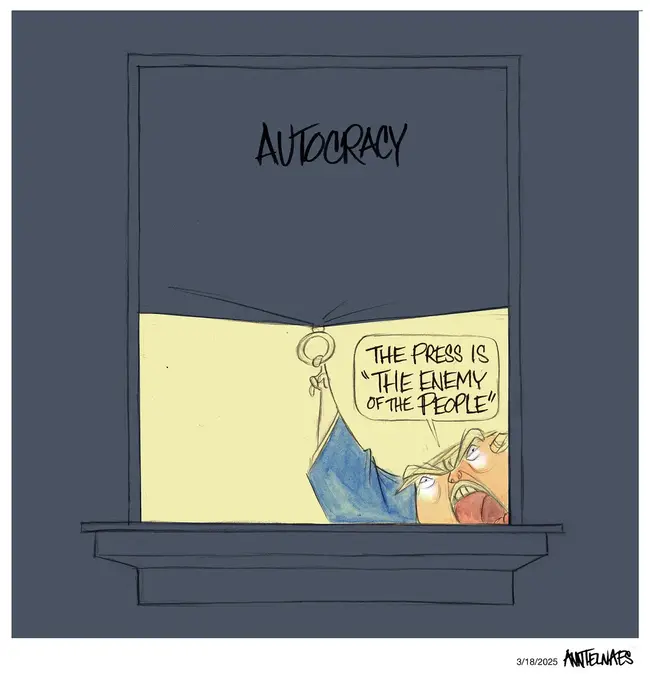
As the Fourth Estate of a Democracy, citizens constantly count on the press to inform them of important developments. People are willing to assert their rights, but they cannot assert their rights as voters if they are unaware there is a problem.
Election integrity is of public interest for many reasons. Some of them are listed on the attached page. We do believe they will appeal to your readers.
Sincerely,
Sherry Healy and Carl Carter
California Election Protection Network
Election Defense Alliance Â
WHY ELECTION INTEGRITY IS OF PUBLIC INTEREST
NUMBERS:Â 89% of voters doubt the integrity of our voting system (July 2006 NPR poll )
TIMELY:Â Elections are a short 5 months away
HIGH STAKES:Â Will new Congressional members be legitimately elected
LEGITIMACY:Â Bona fide democracies are contingent on votes being counted as cast
TAX DOLLARS:Â Enormous ongoing costs not covered by HAVA
BOONDOGGLE:Â Billions for purchase of voting machines is tip of the $$$cost iceberg
GOVERNMENT AT RISK: The peaceful transfer of power is contingent on votes counted as cast.
HOMELAND SECURITY:Â Private companies count votes of the public in black boxes
CORRUPTION: Ranging from facts, such as: 80% of vote tabulation in the United States is performed by just two voting companies, and, two states have now made it illegal to recount federal elections.
INSECURITY:Â Las Vegas slot machines are more secure than voting machines
SCANDAL: The California Secretary of State consistently bends laws to satisfy e-voting vendors at the expense of protecting voters. Why?
RELIABLE SOURCES: The GAO, Brennan Center for Justice (NYU), are sounding the alarm.
TV SCOOPS: Lou Dobbs, CNN “Democracy at Riskâ€; Catherine Crier, Court TV “Defending Our Democracyâ€
DEMOCRACY: The sanctity of democracy begins at the ballot box
CHECKS & BALANCES:Â Our democracy is based on an informed constituency;Â the press has a duty to inform. Â
CONSUMER FRAUD:Â The failure rate of e-voting systems exceed the acceptable rate — ranging from 11% to 78%
Reading about voting machines and their lack of accuracy in US,I sugest a brief look at the Brazilian model,we are not a prefect country in many things but our voting system
is very nice, and things like the Florida affair in the presidential election would probably not happen in Brazil.
Be my guest we will have presidential elections in early october