
 Three years ago, in “Torture: A War Crime Then And Now”, I described the legal principles that led to a conviction and life sentences of those who were responsible for my father’s torture during WWII. I argued that, if applied now, the architects of the Bush/Cheney torture regime would be languishing in prison.
While it is troubling that none of those individuals were prosecuted for war crimes, it is beyond disturbing that President Donald J. Trump has seen fit to nominate Gina Haspel, the current Deputy Director of the Central Intelligence Agency, to be the CIA’s next chief.
Given that Haspel not only oversaw torture at a CIA “black site” in Thailand but was also later involved in the destruction of videotaped evidence of CIA torture, such as the water-boarding of Abu Zubaydah 83 times in a single month, it seems appropriate to revisit several segments of that previous article, which had been initially published in response to a long, very well researched U.S. Senate Intelligence Committee report on U.S. torture…
U.S. Senate Torture Report
 As I wrote in 2014, if there is a downside to the executive summary of the 2014 U.S. Senate Torture Report [PDF], it can be found in the extraordinary lengths to which it goes to demonstrate a long-established fact: Torture is ineffective as a means for extracting actionable intelligence.
Emboldened by that focus, U.C. Berkeley Law Prof. John Yoo authored a response to the Senate Torture Report by way of a, Los Angeles Times op-ed. In 2002, while serving as the Deputy Assistant U.S. Attorney General, Yoo authored a memo that green-lighted CIA torture following the 9/11 attacks. The memo, according to UC-Irvine’s renowned constitutional law professor Erwin Chemerinsky, should serve as the basis for the prosecution of Yoo for war crimes. Shielded by the Obama/Holder Dept. of Justice’s refusal to prosecute, Yoo shamelessly argued in his editorial that the then-newly released Senate Torture Report had shifted [emphasis added] “the debate beyond legality to effectiveness.”
The issue of torture’s “effectiveness” is not and never has been an appropriate subject for “debate.” Robert Colville, the U.N. High Commissioner for Human Rights makes that clear in referencing the U.N. Convention against Torture, an international human rights treaty to which the U.S. is a signatory. “Torture is prohibited absolutely, in all circumstances, at any time,” he explains in regard to the treaty signed by President Ronald Reagan. “It cannot be practiced in war, in peace, during emergencies, during internal instability, any circumstances whatsoever.”
Those legal proscriptions apply not only to those who carry out torture but also, under the principle of “command responsibility,” to high level officials who facilitate or fail to prevent torture by their subordinates.
As I revealed in my five-part series on the History of CIA Torture: Unraveling the Web of Deceit back in 2009, for me, torture is exceedingly personal. In late 1942 my father, James R. Canning, was waterboarded at Shanghai’s Bridge House, an infamous torture chamber — something that entailed a frightening, traumatic and “exquisitely painful,” six-hour ordeal. He eventually signed a “false confession” stating that he was a British agent, even though he knew it wasn’t true and even though he believed at that moment he was signing his own death warrant.
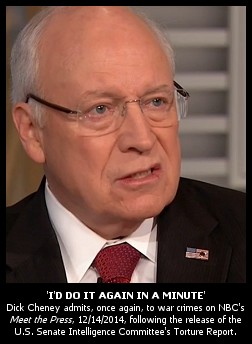
This Partial Trial Transcript [PDF] includes my father’s testimony at the 1948 Hong Kong War Crimes Trials. It exposes the hypocrisy in the Obama/Holder DoJ’s failure to apply the same (“command responsibility”) legal standard to Yoo, former Vice President Dick Cheney — who now proudly declares “I’d do it again in a minute!” — and other high-level, Bush administration officials.
In 1948, that “command responsibility” standard was used to convict Lt. General Eiichi Kinoshida, who received a life sentence even though there was no evidence he personally participated in torture.
If we are indeed, as proclaimed by Sen. Diane Feinstein (D-CA) in her Forward to the Senate Torture Report, a “nation of laws,” President Obama would have heeded calls made at the time of the report’s release, by the ACLU, Human Rights Watch and even by The New York Times to appoint a special prosecutor who would investigate the crimes the CIA allegedly committed at the behest of Cheney et al — crimes that appear as heinous and more so than those that were inflicted upon my father and his fellow civilian inmates during World War II.
Alas, Obama never heeded those calls and there was never any accountability for those horrific U.S. war crimes.
Worse than Bridge House?
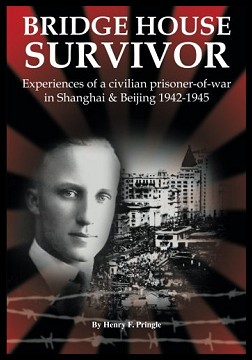 No doubt many readers will find the partial trial transcript of the 1948 war crimes trial disturbing. The conditions it depicts at Shanghai’s Bridge House include the crowding of as many as 19 prisoners in a filthy, insect and vermin infested 19′ x 11′ cell with inadequately fed and, especially during cold winter months, inadequately clothed, civilian prisoners, left with nothing more than a single bucket in the same cell to relieve themselves.
As described in the partial transcript, prisoners at Bridge House were subjected to a variety of tortures, including electric shock treatments, prolonged beatings, stringing prisoners up by their thumbs and waterboarding in order to “make their bodies confess.” The transcript reveals that at least two Bridge House detainees died while in custody of the Japanese military, including a Chinese man who was deliberately deprived of food and water.
Despite a number of horrific descriptions of similar techniques carried out by the CIA against many prisoners after 9/11, (many of whom turned out to be completely innocent of any crime whatsoever), the Senate’s 499-page executive summary might appear relatively sterile to the uninformed. However, it must be kept in mind that the Senate’s more than 6,700-page full report remains classified. The CIA destroyed videotapes that could potentially show that CIA waterboarding was as brutal as my father’s 6-hour ordeal in which he repeatedly lost consciousness, only to awaken to observe one of the Japanese soldiers rolling back-and-forth on his stomach in order to extract water that had been forced up his mouth and nostrils and into his lungs.
Importantly, where the war crimes trial after WWII exposes the brutality of torture from the point of view of the tortured, the Senate Report, a compilation of more than 6 million pages of internal CIA documentation, reveals only the point of view of the torturers themselves.
The methods applied by the Japanese Kempetai at Bridge House were crude in comparison to the CIA’s application of the science of torture, which, as discussed in Part II of our five-part series on the History of CIA torture, quoting Prof. Alfred McCoy, was the product of a “Manhattan Project of the mind” conducted by the CIA between 1950-1962 at a cost of more than $1 billion/year.
While the Bridge House prisoners suffered tremendously, at least they had one-another in that horrific 19’x11′ cell. By contrast, the Senate Torture Report reveals a systematic application of the CIA’s 1963 KUBARK torture manual. CIA detainee/victims, in the years following on 9/11, were forced to suffer prolonged isolation and prolonged sleep and sensory deprivation coupled with the Soviet KGB technique of self-inflicted pain brought on by being forced to remain in inhumane stress positions for extended periods. Between the 83 times he was water-boarded, Abu Zubaydah was kept inside a coffin-like box.
The Senate Torture Report documents:
In one instance, the victim was “chained to a wall in the standing position for 17 days.” Other victims were stripped naked, doused with or submerged in freezing water, shackled and deprived of light. And, unlike the Bridge House prisoners, the victims of CIA torture were subjected to what amounts to rape by a foreign object in the form of “rectal hydration” tubes.
Accountability
 Comparative analysis suggests that the most disturbing gap between then (post-WWII) and now (post-9/11) can be found within the concept of accountability.
As explained by Prof. Suzannah Linton, a British law professor who compiled the Hong Kong War Crimes Trial Collection, the question of legal accountability for war crimes committed during World War II was first addressed by President Franklin D. Roosevelt in an Oct. 7, 1942 declaration. The United Nations War Crimes Commission began collecting lists of criminals in 1943 and a “Sub-Commission” to investigate Japanese war crimes was created in May 1944.
While due process was afforded when the victorious World War II allies conducted the Nuremberg and Hong Kong War Crimes Trials, the legal basis for doing so was perhaps more tenuous in 1948 than it is now. Japan, for example, was not a party to the U.N. War Crimes Commission when that U.N. Commission began collecting lists of criminals in 1943. By contrast, the United States is a party to the 1984 United Nations Convention Against Torture and Other Cruel, Inhumane or Degrading Treatment, which strictly bars the horrific tactics described above.
Under that treaty, and the 1949 Geneva Convention, the U.S. has a legal obligation to either investigate, and when warranted, prosecute those suspected of torture or to extradite every person reasonably accused of having legal responsibility for torture to other nations who, in lieu of our doing so, are willing to carry out the prosecution required by signatories of the treaty.
While Feinstein praised Obama for ordering an immediate end to CIA torture, as we explained in “Fixing the Facts and Legal Opinions Around the Torture Policy”, President Obama’s use of sophistries in which, out of political expediency, he equated law enforcement with “retribution”, amounted to a violation of his solemn oath to see that the laws of the United States are faithfully executed. That oath applies to our treaty obligations under the “Supremecy Clause” of the U.S. Constitution (Article 6) declaring that all such treaties to which the U.S. are signatories “shall be the supreme law of the land”.
If ours is still a nation of laws, Gina Haspel would now be languishing in prison. Instead, she is President Trump’s nominee to be the next Director of the CIA.
• U.S. Senate Torture Report (executive summary, released 12/9/2014) [PDF]
• Shanghai Kempetai Bridge House Trial (partial transcript, James R. Canning, 12/23/1948) [PDF]
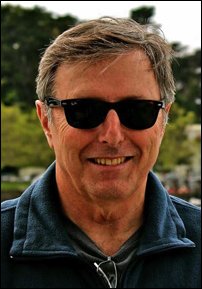 Ernest A. Canning is a retired attorney, author, Vietnam Veteran (4th Infantry, Central Highlands 1968) and a Senior Advisor to Veterans For Bernie. He has been a member of the California state bar since 1977. In addition to a juris doctor, he has received both undergraduate and graduate degrees in political science. Follow him on twitter: @cann4ing










I read today’s editorial in the LA Times print edition entitled, “Are US Elections Secure”?
(note: in the online edition, it is entitled,
“Protect our elections from Russian (and other) threats”).
Is it just me, or does anybody else find this editorial obtuse and “naive”, and one may suspect, intentionally so?
The term “paper” is used ONLY in terms of “paper backup” or “paper trail” or “paper records” and the term “paper ballots” is not used even ONCE in the opinion piece.
JMO, but I find this to be probably intentionally obtuse.
It’s almost as if the political establishment recognizes Public uncertainty and tries to assuage it via using the apparently comforting term for many, “paper”, in every context EXCEPT “paper ballots” that would be hand-marked and hand-counted.
IMO, the term “paper” is being employed as “bait”, always placed in contextual terms that DISTRACT AWAY from the idea of hand-marking and counting paper BALLOTS, and eliminating computers from the entire voting and tabulating process.
No, as long as a “paper trail” is produced, everything will be OK (is the implication of the LAT editorial).
Am I alone in this perception?
Am I just being too picky in my interpretation?
As a retired HS English Teacher, I pay attention, as I tried to teach my students, to word USAGE and placement.
In the LA Times case, it appears to me that the term “paper” is being used as a distraction from the truth, rather than as an expression of ideas leading to truth. In other words, the word “paper” is being employed as PROPAGANDA.
DonL @ 1:
Your comment is somewhat off topic for this item, but I’ll offer a quick response here nonetheless.
You didn’t link the LA Times op-ed in question (and I’m too tired and sick right now to go look it up), but I can imagine it. Have read hundreds like it. And, no, you’re not the only one to find such things objectionable. (I offered a bit of a rant along similar lines when the U.S. Senate Intel Committee called for “paper trails” and “paper backups”, etc. a week or so ago. You can hear that rant in this BradCast.)
I will only dissent from your point on the issue of whether it is “intentionally” done. I can’t pretend to know what these folks (many of whom I respect, including on the Senate Intel Committee, who use the same obtuse “paper trail” wording) are thinking.
The fact is, the industry (the election system vendors) are the ones calling the shots and using the wording that best suits them, and the officials pick it up and use it as well. Some know better. Many don’t. Many including Democrats, by the way.
Republicans tend to choose their wording very careful. Dems don’t. Thus, they still object to “Voter ID” (which is called for without problem in most states and sounds, on the surface, perfectly reasonable) as opposed to “Photo ID voting restrictions” or “Extreme Voter ID restrictions”, which is more accurate, and sounds as disturbing as it is.
Dems have also fallen for calling for “voter-marked paper ballots”, which some of them (for example, former Rep. Rush Holt) understand very clearly to include paper ballots that are marked by computer, but sounds like the hand-marked paper ballots that we actually need for overseeable democracy.
Long way of saying, you are right to be disturbed by it. But I won’t call something intentional unless I know it for a fact. (As I do, for instance, with Rush Holt, who told me himself that he wishes every American in the nation voted on computer Ballot Marking Devices. And he was the, literal, rocket scientist, who led the Democrats fight for election reform in the U.S. House for years, until he retired a session or so ago!)
Some probably have deliberate malicious intention. Someone somewhere crafting this scheme knows what they are doing, a cynical manipulation.
Others involved are comforted by plausible denial. Probably more of them than the former. It’s the same kind of psychology that enables a Gina Haspel to get promoted. Gore Vidal said we are the United States of Amnesia. Denial is a renewable resource.
That said, sometimes something can be blocked, like the bar code ballots in Georgia. Persistence!
Sorry for going OT. I was just upset after reading this editorial (here’s the url):
http://www.latimes.com/opinion/editorials/la-ed-elections-hackers-20180402-story.html
I didn’t mean to distract from the very important torture-related story above.
The above article is pertinent and SCARY.
Gina Haspel seems truly sinister.
But she certainly seems to fit in perfectly in a Trump administration.
Our gov’t is going in a far-right “Dick Cheney direction” once again.
But where else could a Trump possibly lead us?
Ghouls like Haspel and Cheney are fascists, plain and simple.
Torture not only fullfills their hideous goals, it probably turns them on as well.
Brad:
I absolutely respect your desire to NOT draw a conclusion as to a motive for the paper-trail and related rhetoric by officials.
I don’t have a BradBlog/Bradcast, so I can indulge myself.
To go OT one more time, here’s a happy environmental story I blogged about that you and Desi might find heartwarming (heh heh):
http://thegarlicwww.blogspot.com/2018/03/finally-some-good-environmental-news.html
All those who mock the oath–and love to do tough guy schtick by supporting torture–should be waterboarded themselves. Let them make the visceral discovery that a human being is not a fish. Such an experience tends to change one’s point of view.
Well said, Marvin Jones.